NZ beginner investing guide

Sharesies, Hatch, or InvestNow?

Isang calm na guide para mapag-usapan ninyo ng partner mo kung paano magsisimula sa US, Australian, at NZ investing nang hindi nalulunod sa jargon.

General education only. Not financial, tax, or legal advice.

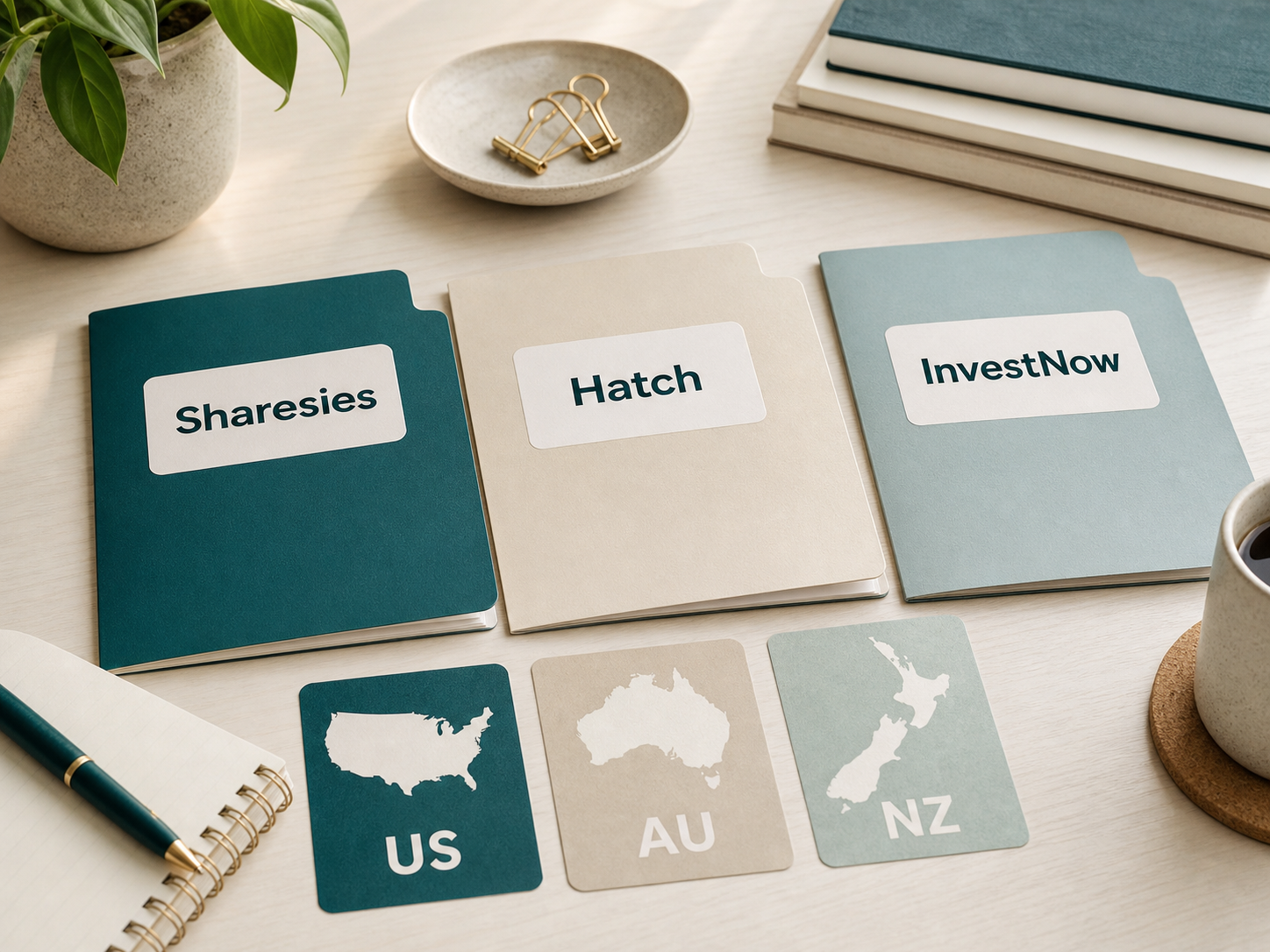
Calm educational visual for comparing beginner investing platforms.

Platform fit

Una munang intindihin kung ano ang kaya bilhin.

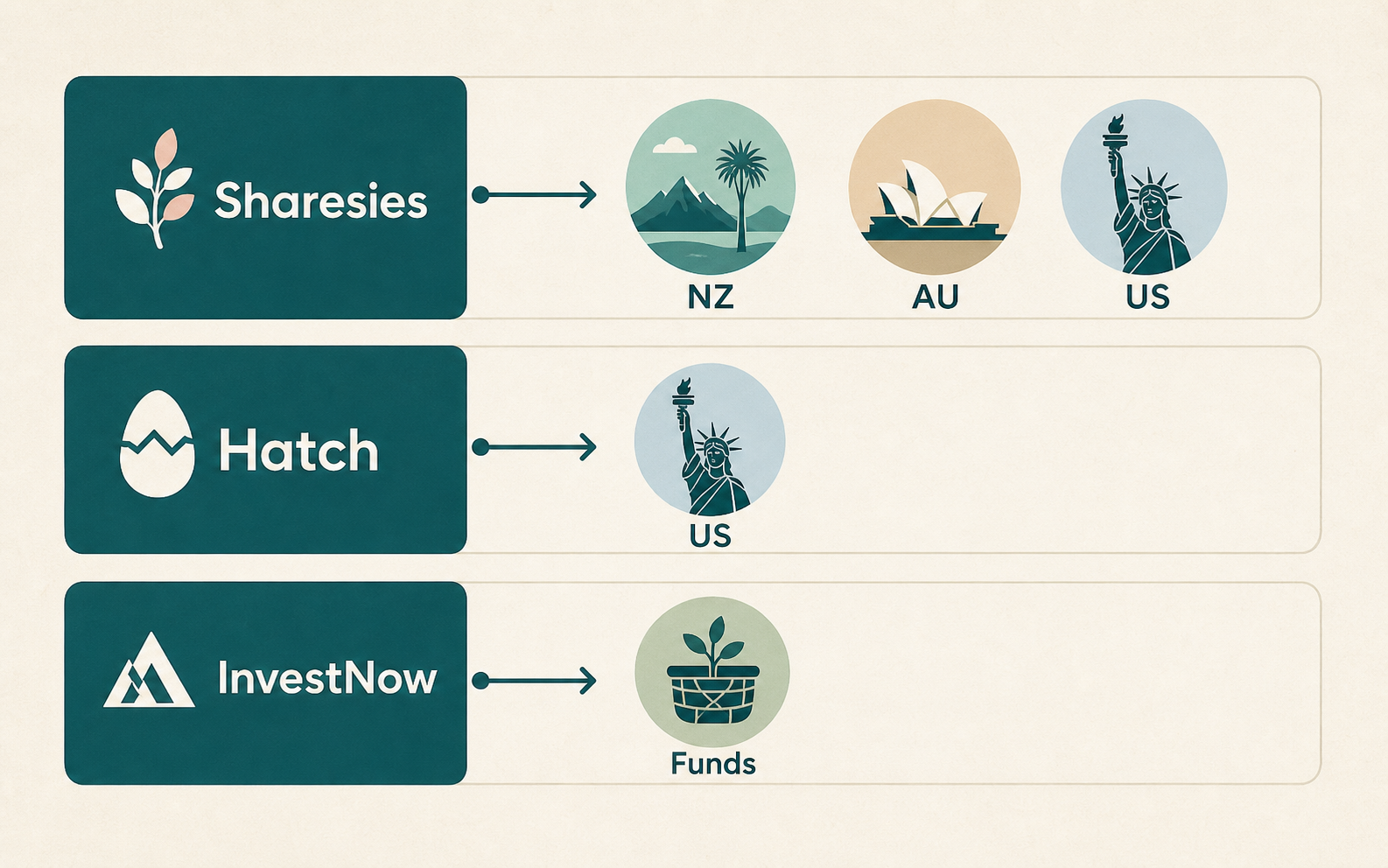
Sharesies is the direct all-in-one route among these three. Hatch is US-focused. InvestNow is mainly for funds and term deposits.

Sharesies

One app for direct NZ, Australian, and US investing access.

Pinaka-simple kung gusto ninyong makita ang NZ, AU, at US shares in one app. Good learning tool, but still check fees before every trade.

Best fit
Beginners who want one simple place to learn the three markets.
Main limit
Percentage-based transaction fees can matter when trades are frequent or large.
  • NZ shares and ETFs
  • Australian ASX shares and ETFs
  • US shares and ETFs
  • Some managed funds
Sharesies pricing
Hatch

US share and ETF platform with flat-fee style brokerage.

Maganda kung US market ang focus ninyo. Kung gusto rin ninyo ng Australia at NZ, kailangan pa rin ng ibang platform.

Best fit
US-focused investors, especially when each manual trade is bigger.
Main limit
No direct NZX or ASX share access in this comparison.
  • US shares
  • US ETFs
  • US fractional access through auto-invest rules
Hatch pricing
InvestNow

Fund platform for managed funds, KiwiSaver, and term deposits.

Best as a core long-term fund platform. Hindi ito trading app for individual shares, pero useful for diversified PIE funds.

Best fit
Long-term passive investing and set-and-forget fund contributions.
Main limit
Not built for picking individual Apple, BHP, or Air NZ shares directly.
  • 150+ investment options
  • Managed funds
  • KiwiSaver
  • Term deposits
InvestNow investment options
Need Sharesies Hatch InvestNow
US shares and ETFs Yes Yes Funds only
Australian ASX shares Yes No No direct shares
NZ shares Yes No Funds only
Managed/index funds Some US ETFs only Yes
Visual map comparing Sharesies, Hatch, and InvestNow by market access.
Platform map: direct shares versus fund access.

Beginner path

Hindi kailangan buksan lahat agad.

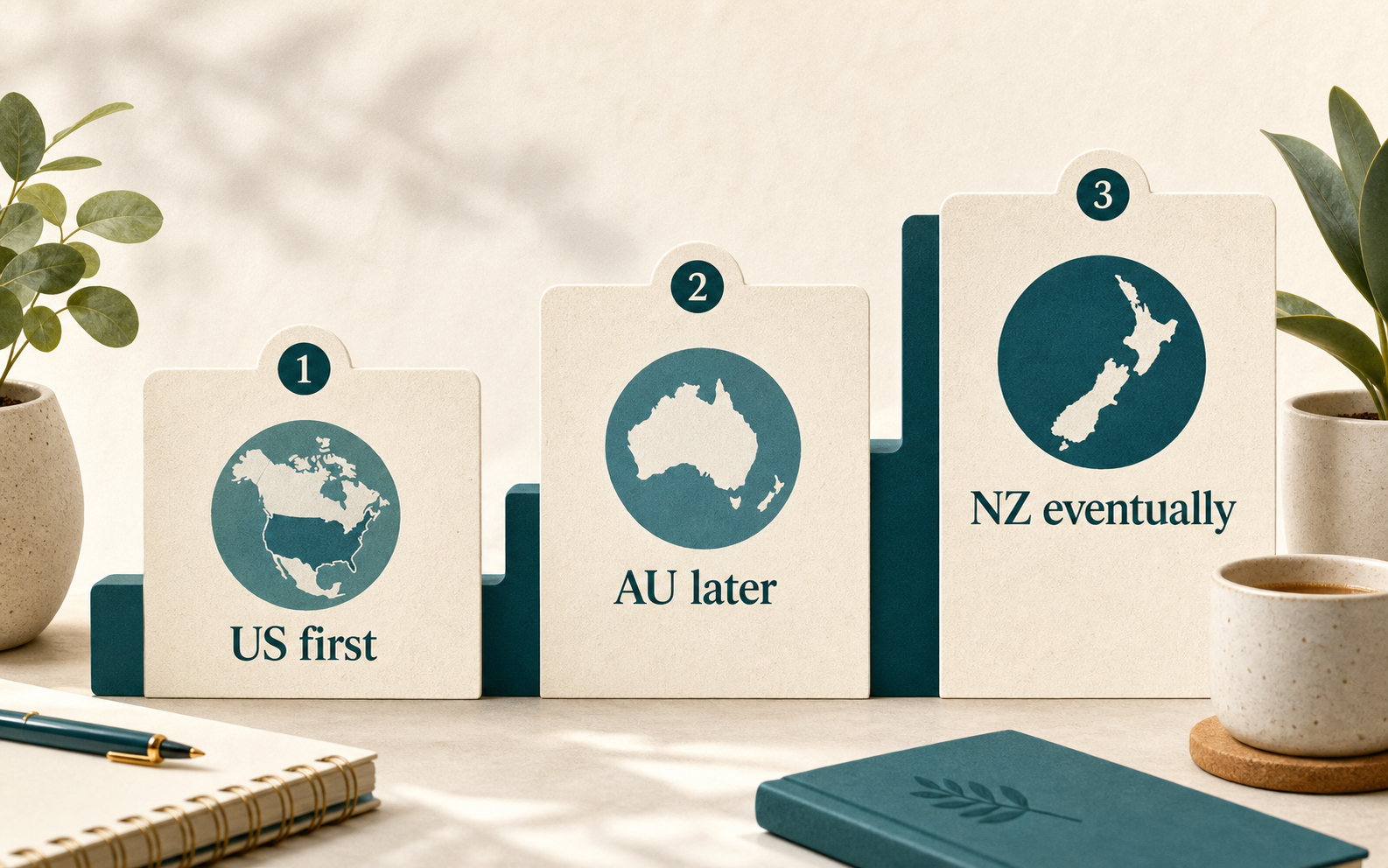
A practical path can start with the simplest core, then add more markets only when there is a reason.

01

Now

US core first

Start with the easiest learning path before adding more markets.

  • Compare InvestNow PIE funds with direct US ETFs on Sharesies or Hatch.
  • Track direct overseas cost base from day one.
  • Keep individual stock picking small until you understand fees and tax.
02

Later

Add Australia only when useful

Australia becomes relevant when you want direct ASX shares or regional exposure.

  • Sharesies is the all-in-one route among the three compared platforms.
  • Direct ASX company shares may have different FIF treatment than ASX-listed global ETFs.
  • Do not open a third platform just for the sake of it.
03

Eventually

Add NZ for home-market familiarity

NZ can sit beside global exposure, but the local market is smaller.

  • Use Sharesies for direct NZ shares if you want company picking.
  • Use InvestNow for fund-style NZ exposure.
  • Review the whole portfolio rather than one platform at a time.
Visual roadmap showing US first, Australia later, and New Zealand eventually.
Roadmap: start simple, then add markets only when needed.

Fee examples

Small trades and larger trades feel different.

The point is not to chase the cheapest app every time. It is to understand the fee shape before placing the order.

US$50

Small US one-off trade

One buy order for a US share or ETF. FX is shown separately because both platforms list a 0.5% currency exchange fee.

Sharesies About US$0.95 transaction fee 1.9% under the US$5 cap, before FX.
Hatch US$3 manual brokerage Flat fee can feel high for very small manual trades.
Hatch Auto-invest About US$0.75 in Hatch comparison Hatch lists auto-invest fees capped at 1% of order value.
Reviewed 2026-06-13 Sharesies pricingHatch pricing

US$1,000

Larger US one-off trade

One buy order for a US share or ETF, before FX and any fund/provider fees.

Sharesies US$5 transaction fee cap The 1.9% fee is capped for US shares.
Hatch US$3 manual brokerage Flat fee can be cheaper for larger manual trades.
InvestNow No direct US trade Use managed or PIE funds instead of direct US share orders.
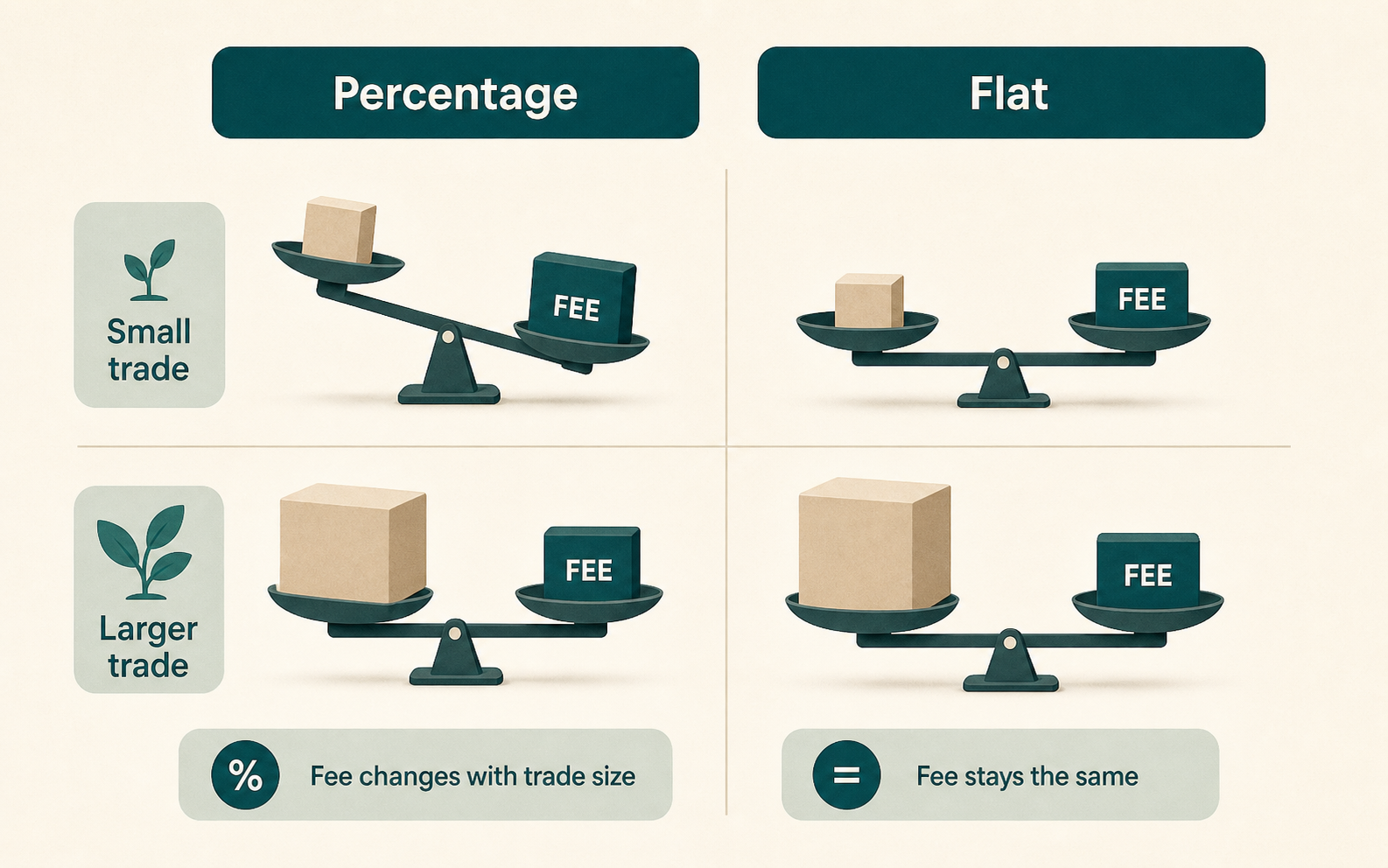
Visual comparison of percentage fees and flat fees for small and larger US trades.
Fee tradeoff: small trades and larger trades behave differently.

ETF choices

You do not need every famous tech stock separately.

For education only: broad market, broad tech, semiconductor, and NZ PIE options solve different problems.

ETF research checklist

Use these as examples to research, not as a buy list.

  • Holdings can change, so inspect the latest holdings or fact sheet on the issuer page.
  • Fees can change, so check expense ratio, fund charges, buy/sell spread, FX, and platform brokerage.
  • Availability can change, so search the ticker inside Sharesies or Hatch before planning a buy.
  • Tax treatment can change, so check whether you are looking at a direct overseas ETF, a NZ PIE fund, or another wrapper.

QQQ, QQQM

Broad tech or Nasdaq-style exposure

For learning about large US growth and technology-heavy baskets without buying each company one by one.

Nasdaq-style funds are not pure technology funds. They can include non-tech companies and can still be concentrated.

QQQ

Invesco QQQ

A widely known Nasdaq-100 tracker. Use it as a reference point when learning how broad growth ETFs are built.

Wrapper
US-domiciled ETF
Companies to check
Popular names to look for on the latest holdings page include Apple, Microsoft, Nvidia, Amazon, Meta, and Alphabet.
Platform check
Search QQQ in Sharesies and Hatch, then compare brokerage, FX, and tax notes.

Verify before buying

  • latest holdings
  • expense ratio or fund charge
  • top companies and concentration
  • platform availability in Sharesies or Hatch
  • domicile and tax wrapper
Reviewed 2026-06-13 Invesco QQQSharesies pricingHatch pricing

QQQM

Invesco NASDAQ 100 ETF

A Nasdaq-100 ETF often compared with QQQ. Compare the current issuer documents instead of assuming both are identical.

Wrapper
US-domiciled ETF
Companies to check
Popular names to look for on the latest holdings page include Apple, Microsoft, Nvidia, Amazon, Meta, and Alphabet.
Platform check
Search QQQM in Sharesies and Hatch; availability and trading support can differ by platform.

Verify before buying

  • latest holdings
  • expense ratio or fund charge
  • top companies and concentration
  • platform availability in Sharesies or Hatch
  • domicile and tax wrapper
Reviewed 2026-06-13 Invesco NASDAQ 100 ETF QQQMSharesies pricingHatch pricing

VGT, XLK, FTEC, IYW

US information technology sector ETFs

For comparing funds that focus more directly on information technology sector companies.

Sector rules differ by index. Two tech ETFs can have different weights, fees, and company exclusions.

VGT

Vanguard Information Technology ETF

A broad information technology sector ETF to compare against Nasdaq-style funds.

Wrapper
US-domiciled ETF
Companies to check
Popular names to look for on the latest holdings page include Apple, Microsoft, Nvidia, Broadcom, and AMD.
Platform check
Search VGT in Sharesies and Hatch, then check current holdings and expense ratio.

Verify before buying

  • latest holdings
  • expense ratio or fund charge
  • top companies and concentration
  • platform availability in Sharesies or Hatch
  • domicile and tax wrapper
Reviewed 2026-06-13 Vanguard Information Technology ETF VGTSharesies pricingHatch pricing

XLK

Technology Select Sector SPDR Fund

A technology sector ETF linked to the S&P sector framework. Compare concentration before using it as a tech proxy.

Wrapper
US-domiciled ETF
Companies to check
Popular names to look for on the latest holdings page include Apple, Microsoft, Nvidia, Broadcom, and AMD.
Platform check
Search XLK in Sharesies and Hatch, then check current holdings and expense ratio.

Verify before buying

  • latest holdings
  • expense ratio or fund charge
  • top companies and concentration
  • platform availability in Sharesies or Hatch
  • domicile and tax wrapper
Reviewed 2026-06-13 Technology Select Sector SPDR Fund XLKSharesies pricingHatch pricing

FTEC

Fidelity MSCI Information Technology Index ETF

Another information technology ETF for comparing index rules, fees, and top-company weights.

Wrapper
US-domiciled ETF
Companies to check
Popular names to look for on the latest holdings page include Apple, Microsoft, Nvidia, Broadcom, and AMD.
Platform check
Search FTEC in Sharesies and Hatch; confirm current trading support before planning around it.

Verify before buying

  • latest holdings
  • expense ratio or fund charge
  • top companies and concentration
  • platform availability in Sharesies or Hatch
  • domicile and tax wrapper
Reviewed 2026-06-13 Fidelity MSCI Information Technology Index ETF FTECSharesies pricingHatch pricing

IYW

iShares U.S. Technology ETF

A US technology ETF to compare with VGT, XLK, and FTEC when studying holdings and fees.

Wrapper
US-domiciled ETF
Companies to check
Popular names to look for on the latest holdings page include Apple, Microsoft, Nvidia, Broadcom, and AMD.
Platform check
Search IYW in Sharesies and Hatch, then verify current costs and availability.

Verify before buying

  • latest holdings
  • expense ratio or fund charge
  • top companies and concentration
  • platform availability in Sharesies or Hatch
  • domicile and tax wrapper
Reviewed 2026-06-13 iShares U.S. Technology ETF IYWSharesies pricingHatch pricing

SMH, SOXX, SOXQ

Semiconductor ETFs

For learning about chip designers, chip makers, and equipment companies as a narrower satellite category.

Semiconductor ETFs are narrower than broad tech funds. Price swings and company concentration can be larger.

SMH

VanEck Semiconductor ETF

A semiconductor ETF often used to study chip-company exposure and concentration.

Wrapper
US-domiciled ETF
Companies to check
Popular names to look for on the latest holdings page include Nvidia, TSMC, Broadcom, AMD, ASML, and Qualcomm.
Platform check
Search SMH in Sharesies and Hatch, then check current top holdings and concentration.

Verify before buying

  • latest holdings
  • expense ratio or fund charge
  • top companies and concentration
  • platform availability in Sharesies or Hatch
  • domicile and tax wrapper
Reviewed 2026-06-13 VanEck Semiconductor ETF SMHSharesies pricingHatch pricing

SOXX

iShares Semiconductor ETF

A semiconductor ETF to compare against SMH and SOXQ for index rules, weights, and fees.

Wrapper
US-domiciled ETF
Companies to check
Popular names to look for on the latest holdings page include Nvidia, Broadcom, AMD, Qualcomm, and semiconductor equipment companies.
Platform check
Search SOXX in Sharesies and Hatch, then check current issuer documents.

Verify before buying

  • latest holdings
  • expense ratio or fund charge
  • top companies and concentration
  • platform availability in Sharesies or Hatch
  • domicile and tax wrapper
Reviewed 2026-06-13 iShares Semiconductor ETF SOXXSharesies pricingHatch pricing

SOXQ

Invesco PHLX Semiconductor ETF

A semiconductor ETF example for checking how a different index provider builds chip exposure.

Wrapper
US-domiciled ETF
Companies to check
Popular names to look for on the latest holdings page include Nvidia, Broadcom, AMD, Intel, and chip equipment companies.
Platform check
Search SOXQ in Sharesies and Hatch; smaller or newer funds may not be supported everywhere.

Verify before buying

  • latest holdings
  • expense ratio or fund charge
  • top companies and concentration
  • platform availability in Sharesies or Hatch
  • domicile and tax wrapper
Reviewed 2026-06-13 Invesco PHLX Semiconductor ETF SOXQSharesies pricingHatch pricing

USF, UST, USG

NZ fund or PIE alternatives to research

For learning the difference between direct overseas ETFs and NZ-based fund wrappers before choosing where to study next.

Do not treat a PIE wrapper as automatically better. Compare fund charges, tax wrapper, holdings, and how it fits your record keeping.

USF

Smart Invest US 500 fund

A broad US market alternative to compare against direct US-domiciled ETFs.

Wrapper
NZ-listed fund or PIE-style wrapper to verify
Companies to check
Check the current provider documents for the top companies and whether it tracks broad US large-cap exposure.
Platform check
Search USF in Sharesies, NZX, and the provider site; Hatch is US-only so this is not its main use case.

Verify before buying

  • latest holdings
  • expense ratio or fund charge
  • top companies and concentration
  • platform availability in Sharesies or Hatch
  • domicile and tax wrapper
Reviewed 2026-06-13 Smart Invest fundsSharesies pricing

UST

Smart Invest US technology fund

A NZ-accessible technology fund alternative to compare with direct US tech ETFs.

Wrapper
NZ-listed fund or PIE-style wrapper to verify
Companies to check
Check the current provider documents for Apple, Microsoft, Nvidia, and the actual top weights.
Platform check
Search UST in Sharesies, NZX, and the provider site; confirm the exact fund before comparing fees.

Verify before buying

  • latest holdings
  • expense ratio or fund charge
  • top companies and concentration
  • platform availability in Sharesies or Hatch
  • domicile and tax wrapper
Reviewed 2026-06-13 Smart Invest fundsSharesies pricing

USG

Smart Invest US growth fund

A NZ-accessible growth-style alternative to compare with Nasdaq or broad growth ETFs.

Wrapper
NZ-listed fund or PIE-style wrapper to verify
Companies to check
Check the current provider documents for the top companies and whether the fund is growth, tech-heavy, or broader.
Platform check
Search USG in Sharesies, NZX, and the provider site; verify current support before planning a buy.

Verify before buying

  • latest holdings
  • expense ratio or fund charge
  • top companies and concentration
  • platform availability in Sharesies or Hatch
  • domicile and tax wrapper
Reviewed 2026-06-13 Smart Invest fundsSharesies pricing
Visual map of broad market, technology, semiconductor, and PIE fund categories.
ETF map: broad core first, narrow sectors as satellites.

Tax and safety

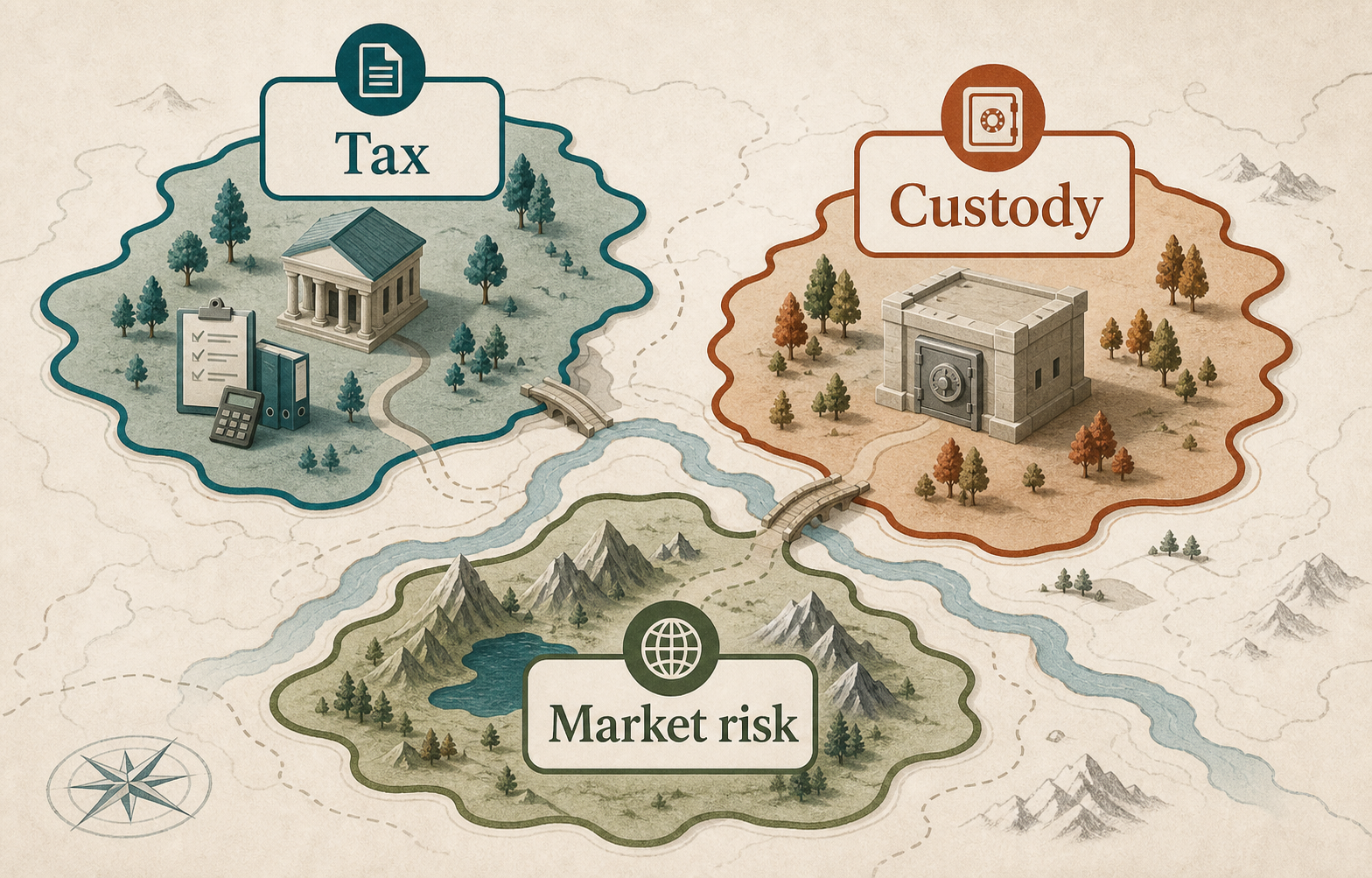
FIF, custody, and market risk are separate topics.

Current IRD guidance still matters more than social-media shortcuts. Treat proposed changes as proposed until official sources say otherwise.

Current official threshold

NZ$50,000 total cost for the de minimis exemption, based on IRD guidance checked 2026-06-13.

Some imported research mentions proposed 2026 threshold changes. This site does not treat those as law unless verified from official government or IRD sources.

IRD foreign investment funds guidanceIRD FIF exemptions

Cost base is combined across direct overseas platforms.

PIE funds do not work the same way as directly held overseas shares.

ASX-listed Australian company exemptions have conditions. Do not assume every Australian investment is exempt.

Dividends can still be taxable even when a FIF exemption applies.

Tax concept

1. Cost base is the money you paid, not today's market value

ELI5: kung bumili kayo ng direct overseas shares or overseas ETFs, track the total NZD cost you paid. The common beginner shortcut is to look at current value, but the de minimis threshold discussion is about cost.

Reviewed 2026-06-13 IRD FIF exemptions

Tax concept

2. Combine direct overseas holdings across platforms

If you hold direct overseas shares in more than one place, do not treat each app as a separate NZ$50,000 bucket. Keep one combined cost-base record for direct overseas investments.

Reviewed 2026-06-13 IRD FIF exemptions

Tax concept

3. FIF may apply means extra tax calculation work

Being over the threshold does not simply mean one extra fee. It can mean checking which FIF method applies, keeping records, and getting tax advice if the portfolio becomes material.

Reviewed 2026-06-13 IRD foreign investment funds guidance

Tax concept

4. Dividends are their own tax topic

Dividends can be taxable income even when a FIF exemption applies. Do not mix dividend tax, FIF threshold, and capital-gain intent into one mental bucket.

Reviewed 2026-06-13 IRD foreign investment funds guidanceIRD FIF exemptions

Wrapper difference

Direct US shares or US ETFs

You usually hold an overseas investment directly through the platform's custody chain. Cost can count toward the current FIF de minimis threshold, and dividends still need attention.

Reviewed 2026-06-13 IRD foreign investment funds guidanceIRD FIF exemptions

Wrapper difference

NZ PIE or managed fund

You hold units in a NZ tax wrapper or managed fund. That is different tax plumbing, not automatically a quality ranking. Compare fees, holdings, PIR/tax handling, and provider documents.

Reviewed 2026-06-13 InvestNow investment optionsSmart Invest funds

Wrapper difference

ASX-listed Australian investments

Some ASX-listed Australian companies can be exempt from FIF, but conditions apply. Treat each Australian investment as something to verify, not as automatically exempt.

Reviewed 2026-06-13 IRD FIF exemptions
Direct overseas cost base Beginner read Lesson
NZ$45k cost base Usually below the de minimis threshold Market value can rise above NZ$50k, but the exemption test described by IRD is based on cost.
NZ$80k cost base Over current NZ$50k de minimis threshold FIF calculations may apply unless another exemption applies.
NZ$120k cost base Over current NZ$50k de minimis threshold Platform fee differences matter less once tax structure and admin become the bigger issue.

Safety concept

Market loss

ELI5: if the share or ETF price falls, that is normal investment risk. Custody, nominee records, or broker insolvency protection do not refund market losses.

Reviewed 2026-06-13 SIPC protection for investors

Safety concept

Broker insolvency protection

For Hatch's US share setup, read the Hatch ownership article and SIPC source carefully. SIPC-style protection is about missing securities or cash at a failed member broker, not bad investment performance.

Reviewed 2026-06-13 Hatch share ownership explainerSIPC protection for investors

Safety concept

Platform security

Security controls help protect account access and operations. They do not change the risk of the companies, ETFs, or funds you choose.

Reviewed 2026-06-13 How Sharesies keeps the platform safe

Before trusting a platform

Questions to ask separately from "will this investment go up?"

  • Where are client money and investments held?
  • Is there a custodian or nominee, and what does that structure cover?
  • What happens if the platform or broker has an insolvency event?
  • What is not covered, especially market losses and normal investment risk?
  • How would you export records for tax, transfers, or a future adviser?
Sharesies custody serviceSharesies investment ownership explainerHow Sharesies keeps the platform safeHatch share ownership explainerSIPC protection for investors
Visual explanation of direct overseas cost base and FIF threshold awareness.
FIF map: cost base is a tax-admin trigger, not a performance score.
Visual caution map showing tax, custody, and market risk as separate concepts.
Safety map: custody structure does not remove market risk.

Plain language

Terms na paulit-ulit ninyong makikita.

Keep these terms nearby while comparing platforms.

Individual share

A small ownership slice of one company.

Isang kumpanya lang, kaya mas concentrated ang risk.

ETF

A basket of investments that trades on an exchange.

Parang basket. One buy, maraming holdings sa loob.

Managed fund

A fund where a manager or index process handles the portfolio.

Set-and-forget style. Hindi ka pipili ng bawat company.

FX fee

Currency exchange fee when converting NZD to another currency.

Bayad kapag nagpapalit ng pera, for example NZD to USD.

FIF

New Zealand tax rules that can apply to overseas investments.

Important kapag lumalaki na ang direct overseas holdings ninyo.

Custody

How the platform or custodian holds assets for investors.

Hindi ito market-loss protection. It is about asset holding structure.

Partner checklist

Before kayo mag-open ng account.

Use this as a conversation checklist, not as a buying instruction.

  1. Decide whether the first goal is direct shares or diversified funds.
  2. Write down the market you actually need now: US, AU, NZ, or funds.
  3. Check order size before choosing between percentage and flat brokerage.
  4. Track direct overseas cost base across platforms from the start.
  5. Keep platform safety and market risk as separate ideas.
  6. Review official sources before every large change.
Visual checklist for beginner investing conversations.
Checklist: decide together before opening more accounts.

Review date

Sources last reviewed 2026-06-13

Fees, tax rules, and platform access can change. Re-check official sources before using this guide for real money decisions.

Open source list